Pending review by our mountain guides
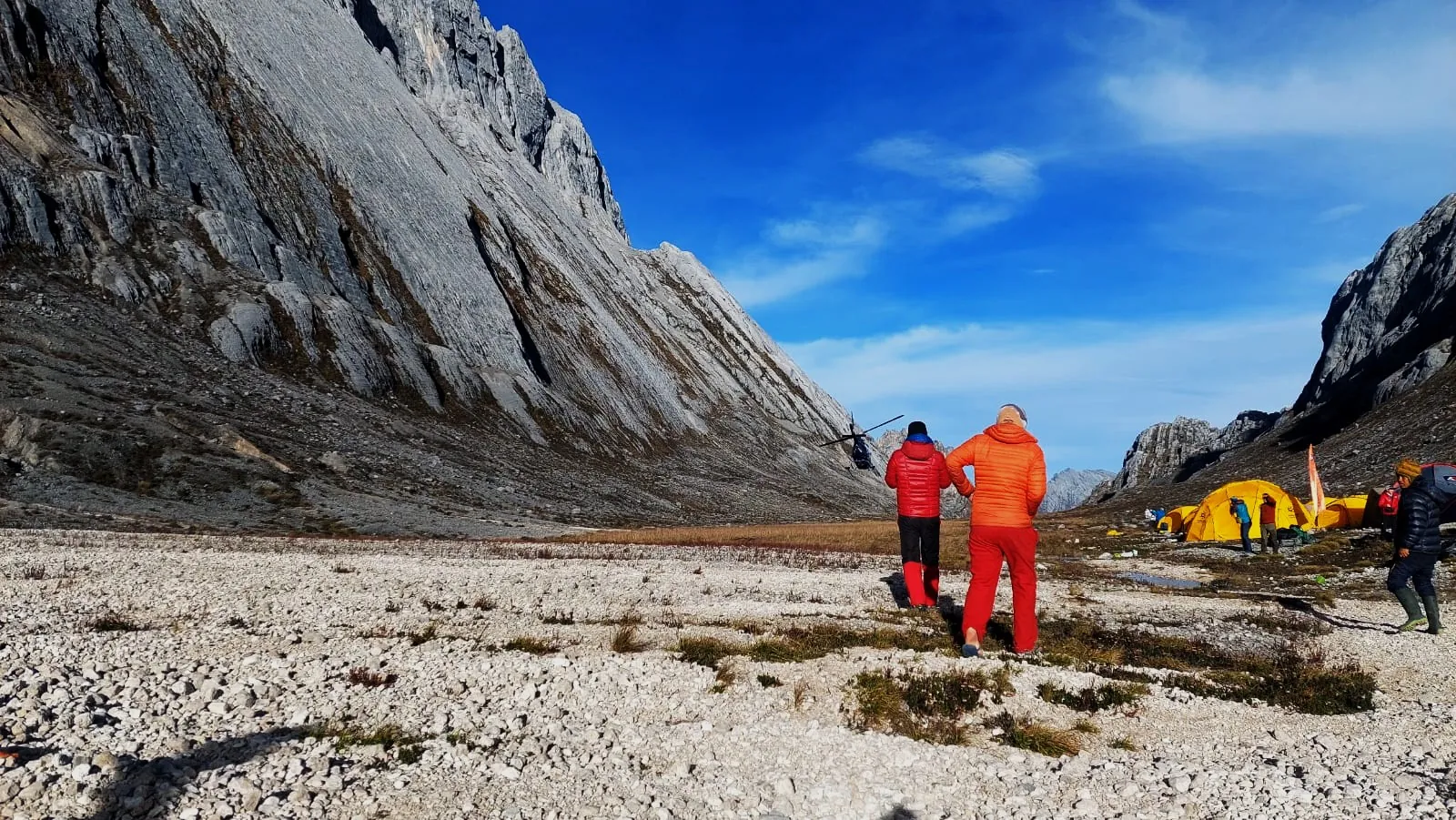
Every Carstensz Pyramid expedition, whether you arrive on foot or by helicopter, comes together at the same place: Yellow Valley Base Camp, known locally as Lembah Kuning. It is the main base camp for the climb and the last departure point for the summit of Carstensz Pyramid (Puncak Nemangkawi, 4,884 m).
This article gives a general idea of what to expect there. Details vary by package and by group, and your proposal is the final word.
Where it is
Yellow Valley Base Camp sits at approx. 4,200–4,300 m. For comparison, Timika, where every itinerary starts, is at approx. 30 m, and Tsinga village, the starting point of the trekking route, is at approx. 1,400 m. Base camp is a high place to live, and it is wise to treat the altitude with respect from the moment you arrive.
How you get there
On the trekking route, you reach base camp on foot from Tsinga: over three days in our 11-day itinerary, or four days in our 13-day itinerary. On the helicopter route, you fly from Timika directly to base camp on the second day of the trip.
The two routes feel different on arrival. Trekkers arrive after several days of gaining height on foot. Helicopter clients arrive straight from near sea level, so it makes sense to take things slowly at first. Our 8-day helicopter itinerary sets aside days at base camp for acclimatization and the summit.
Your camp
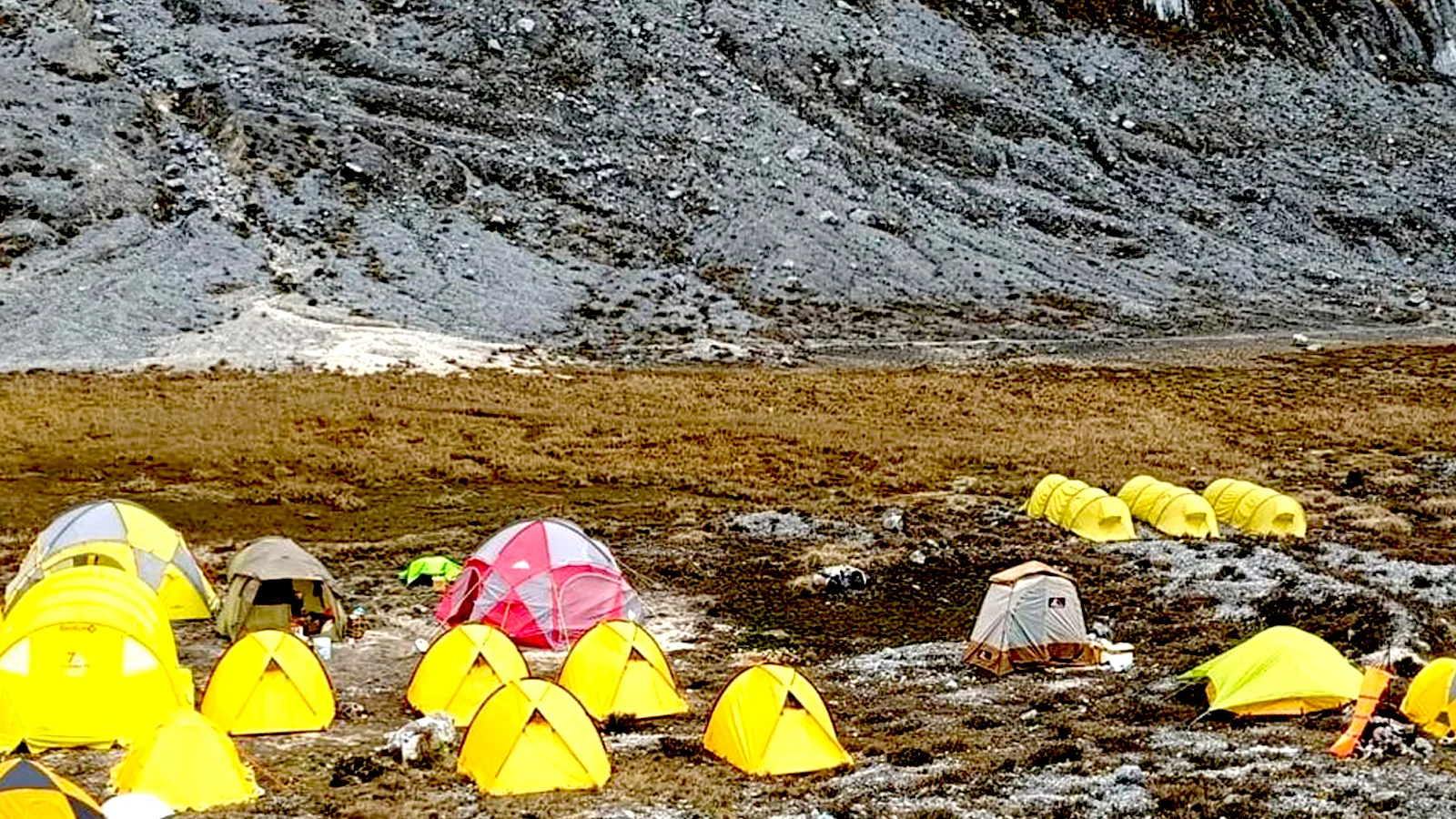
Base camp is a tented camp. Tents and cooking equipment are included in our packages, as is mountain food. Local staff (guide, cook and porter, depending on your package) support the expedition, and experienced mountain guides lead the climb.
What you bring matters. A sleeping bag is not included, and neither is personal camping equipment, so pack warm layers and a sleeping bag suited to a high mountain camp. As general guidance, plan for cold and wet conditions, as you would at any high camp. Drinks, laundry and other personal expenses are not included either.
The rhythm of base-camp days
Base camp is where you rest before the climb, prepare for it, and recover afterwards. As general guidance, base-camp time is well spent checking that your gear fits and works, going over your rope techniques with your guide, and resting, eating and drinking well so your body can adjust to the altitude.
The summit climb starts from base camp. Our 11-day trekking itinerary reserves two days for climbing. The 13-day trekking itinerary has a summit day followed by a spare day. The 6-day helicopter itinerary sets aside two days for climbing activities, and the 8-day helicopter itinerary sets aside two days for acclimatization and the summit. Those extra days are there for a reason: the mountain sets the pace.
Weather and patience
Our itineraries are guidelines. Weather can extend your stay at base camp, and it can delay helicopter and charter flights in and out. Every client should reserve extra days for this. Extra days beyond the agreed itinerary are not included in the package price, and neither are costs caused by flight delays or cancellations.
Patience is part of base-camp life. Bring a book, a journal or a deck of cards, and be ready for the plan to shift.
One team, together
All members of a group go to the mountain and return as one group. If someone splits from the group, extra costs apply. That shared schedule is part of what makes base camp a team environment: you wait, rest and climb together.
Safety and insurance
Base camp is remote. Every client must be covered by insurance for cancellation, accident, medical, emergency evacuation, and loss or damage of baggage. Evacuation and rescue costs are not included in our packages, and the company is not responsible for clients without this insurance. Please make sure your policy is in place before you travel.
The people around you
The staff who support your camp are part of the experience. We are a company owned and managed by the indigenous Amungme people, and time at base camp is a good chance to get to know the team behind your climb.
This article is general guidance and is pending review by our mountain guides. Your final itinerary and requirements are confirmed in your proposal.